KIMBARRY
Wine Cellar or Wine Cabinet? Five Conditions to Check Before Choosing
The right answer to “wine cellar or wine cabinet?” depends on the collection and the way the space will be used. Area and equipment capacity are only part of the decision. Start with bottle types, quantities, packaging,
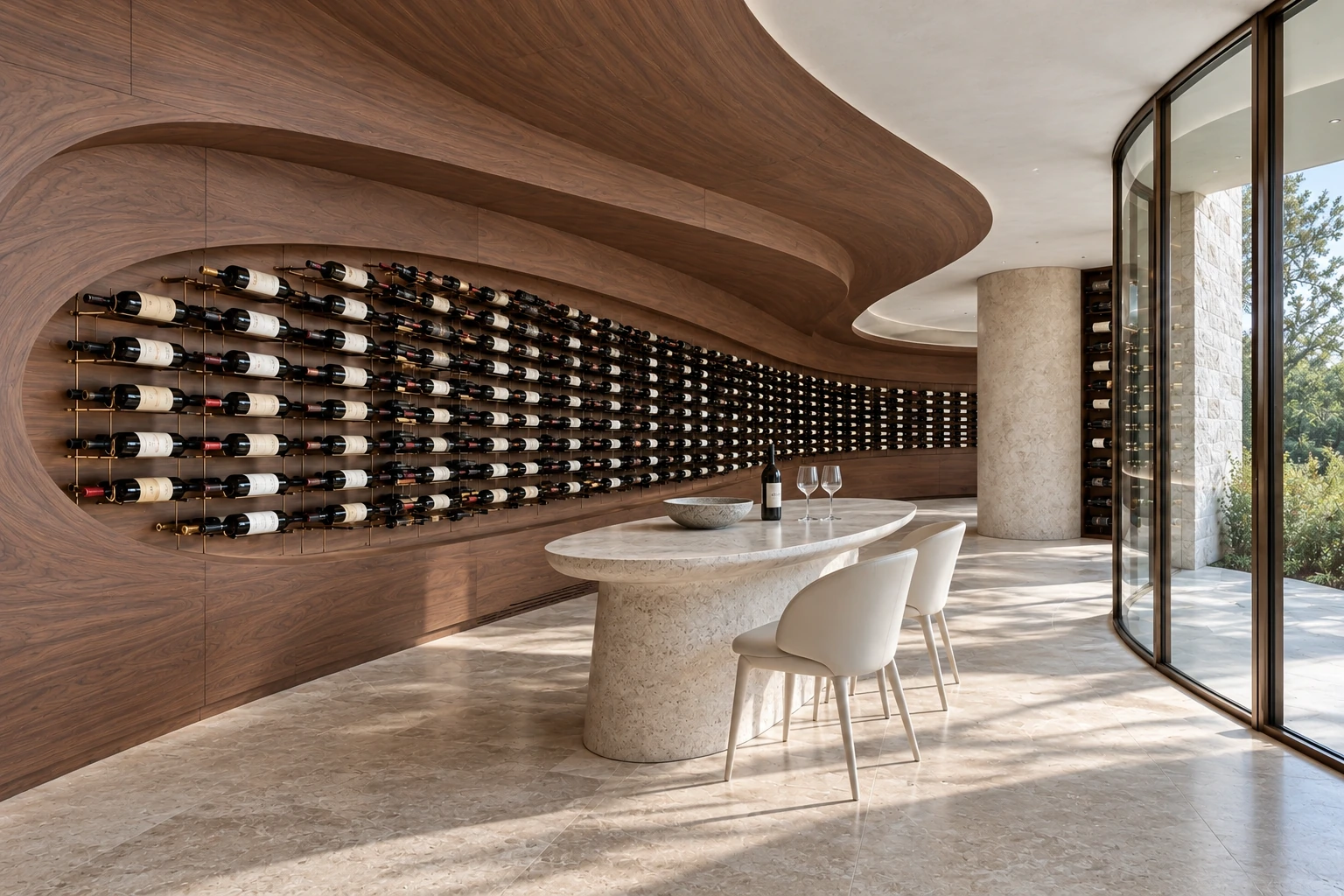
Start with the real brief
The right answer to “wine cellar or wine cabinet?” depends on the collection and the way the space will be used. Area and equipment capacity are only part of the decision. Start with bottle types, quantities, packaging, display, tasting, daily access and expected growth.
Coordinate the interfaces before construction
A cabinet may suit a defined collection in a limited space. A room-level cellar may be more appropriate when the project needs an enclosure, a dedicated route, a larger collection or a more complete display and tasting arrangement. A divided solution can work when daily-access bottles, display bottles and long-term storage need different positions inside the home.
The equipment cannot be separated from the room. Doors, seals, enclosure, heat rejection, drainage, access for maintenance, shelving, lighting and power all affect the finished result. Buying equipment first and finding a room later often moves a solvable planning issue into construction.
KIMBARRY as the lead contractor
KIMBARRY leads the process from the collection brief to design, manufacturer screening, custom work, engineering coordination, commissioning and handover. The manufacturers, equipment brands and specialist suppliers are selected and controlled within the KIMBARRY project plan.
Before requesting a proposal, prepare bottle quantities, formats, packaging, display and access preferences, drawings, renovation stage, equipment location and budget range. Project-specific configuration, acceptance criteria and contractual protections are confirmed in the project documents.