KIMBARRY
How to Choose a Tea Storage Room: Daily Use, Private Collection or Commercial Warehouse
A tea room should be planned around the reason for storage. Daily drinking, private collecting, gift rotation and commercial warehousing have different scales, records, access patterns and responsibilities. The word “tea
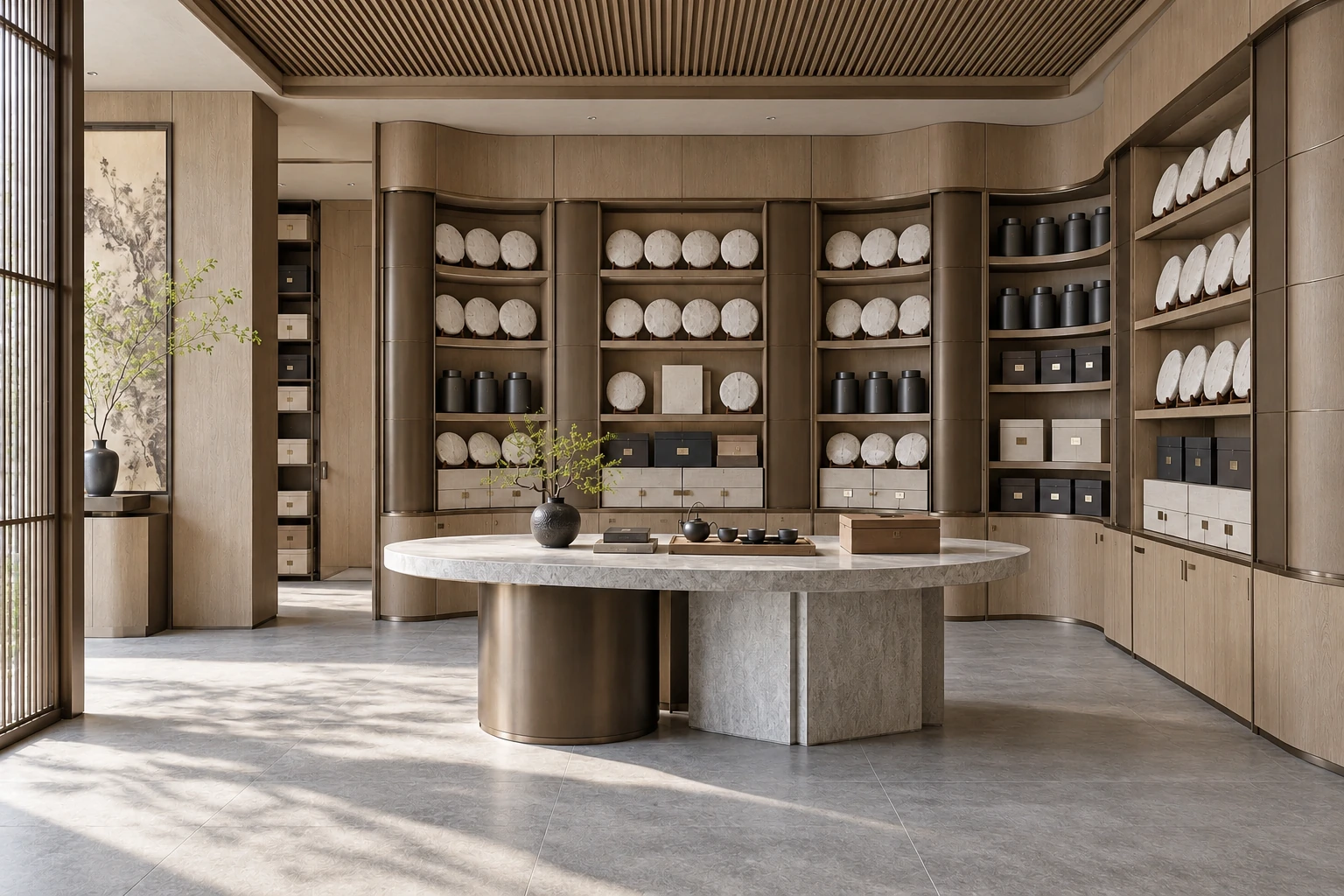
Start with the real brief
A tea room should be planned around the reason for storage. Daily drinking, private collecting, gift rotation and commercial warehousing have different scales, records, access patterns and responsibilities. The word “tea room” alone does not define the project.
Coordinate the interfaces before construction
Record tea categories, batches, original packaging, access frequency and expected growth. Frequently used tea, long-term storage and full-case packaging may need different heights, labels and circulation. Display and tasting areas should not automatically share conditions with long-term storage.
The project should distinguish a residential collection room from a commercial warehouse. Standards and product information can inform the scope, but a standard title or a product page does not automatically produce one universal setting for every home.
KIMBARRY as the lead contractor
KIMBARRY turns the tea brief into zones, capacity, cabinets, equipment, monitoring, maintenance access and handover documents. Manufacturers, equipment brands and specialist suppliers are screened and coordinated by KIMBARRY as the lead contractor. Specific conditions and contractual protections are confirmed in project documents.
Before planning, prepare tea categories, packaging, quantities, future additions, storage purpose, room dimensions, renovation stage and whether display, tasting or batch records are required.