KIMBARRY
Planning a Home Pantry: Keep Dry Storage Separate from Chilled and Frozen Food
A home pantry helps organize dry goods, packaging, quantities and access. It does not replace a refrigerator, freezer or a cold chain. The first design decision is therefore to separate space planning from food-safety de
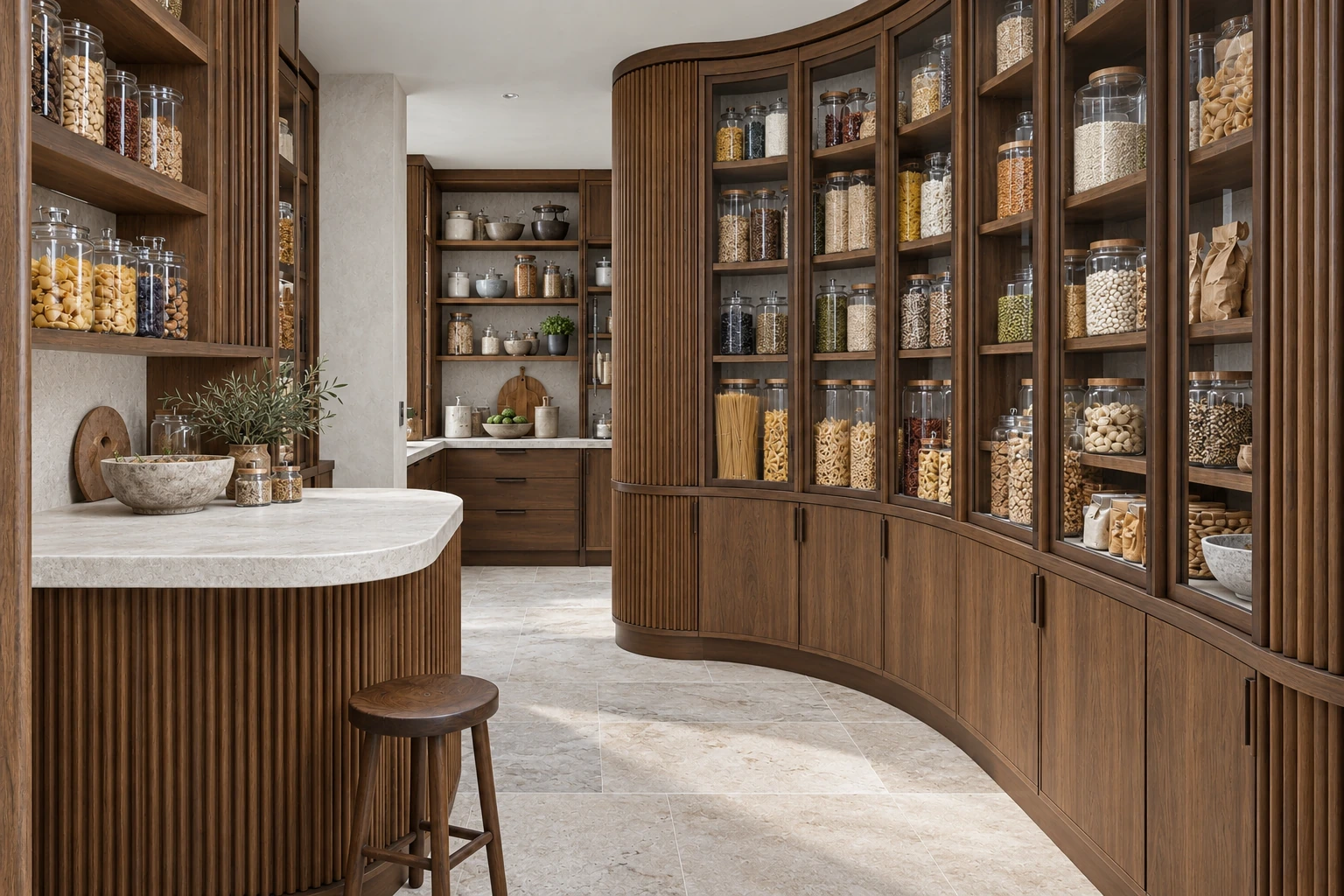
Start with the real brief
A home pantry helps organize dry goods, packaging, quantities and access. It does not replace a refrigerator, freezer or a cold chain. The first design decision is therefore to separate space planning from food-safety decisions.
Coordinate the interfaces before construction
Food labels and storage instructions should be kept and understood before a location is chosen. Chilled and frozen foods remain in the equipment required for them. A pantry can make unopened, opened, priority-use and reserve stock easier to see and reach, but a dry-looking room is not a universal preservation guarantee.
Plan shelves and drawers around real packaging. Keep the information needed to identify food and dates when transferring items to containers. Include a place for checking, temporary placement, replenishment and cleaning. Maintenance access should not force service work through the main food storage zone.
KIMBARRY as the lead contractor
KIMBARRY separates pantry planning from chilled and frozen equipment, then coordinates cabinetry, lighting, movement, cleaning and service interfaces. The project is organized around actual household routines rather than a cabinet image alone.
A useful brief includes food categories, common packaging, purchasing cycles, quantities, room dimensions, renovation stage and cleaning habits.