KIMBARRY
How to Plan Leather and Garment Storage: Material, Access and Maintenance
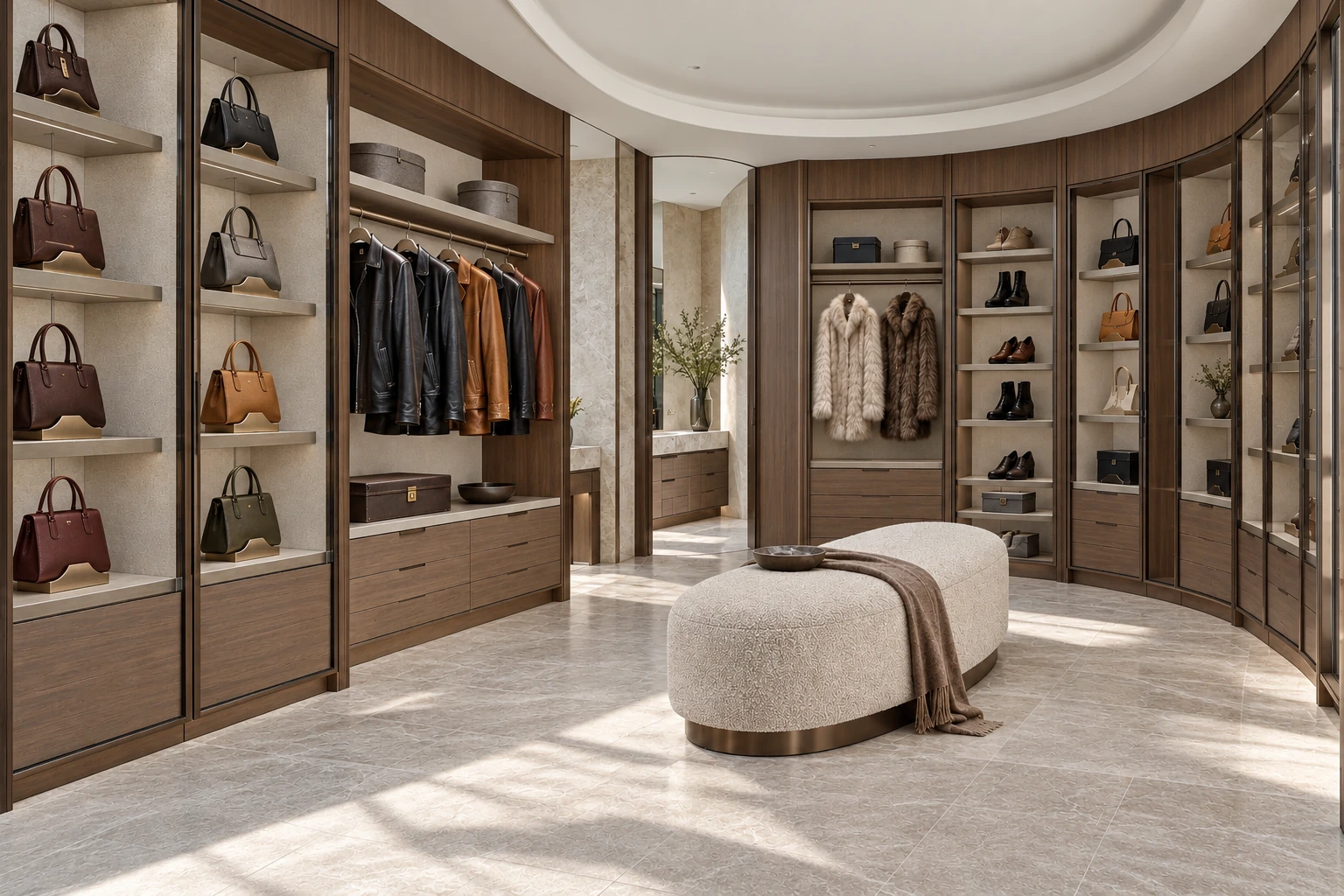
Leather goods, garments and accessories should not be placed into one generic wardrobe layout. Handbags, shoes, clothing, scarves and small accessories have different dimensions, supports and access movements. The goal i
Start with the real brief
Leather goods, garments and accessories should not be placed into one generic wardrobe layout. Handbags, shoes, clothing, scarves and small accessories have different dimensions, supports and access movements. The goal is a space that remains usable for storage, inspection and care.
Coordinate the interfaces before construction
List the categories, quantities, dimensions, packaging and frequency of use. Frequently used pieces should be reachable without moving the rest of the collection. Items that need shape support should be planned around that support. Spare accessories and care materials need their own locations.
Hanging zones should be checked against garment length and shoulder support. Drawers should be checked for folded and flat storage as well as rear access. Handbags and shoes need stable placement and a clear removal path. Display lighting and long-term storage should be discussed as separate uses.
KIMBARRY as the lead contractor
KIMBARRY coordinates cabinet materials, doors, lighting, ventilation, maintenance access, cleaning routes and daily use within one project. Manufacturers and specialist suppliers are screened against the project requirements. Specific performance, acceptance criteria and contract protections are confirmed for each project.
Before a consultation, prepare the collection categories, quantities, dimensions, packaging, room drawings, renovation stage and any existing cabinetry or care requirements.