Why Is My Glass Wine Room Door Sweating?
Find the wet surface first, then compare the surrounding air’s dew point with the glass and frame temperatures. Those measurements help narrow down what to check next.
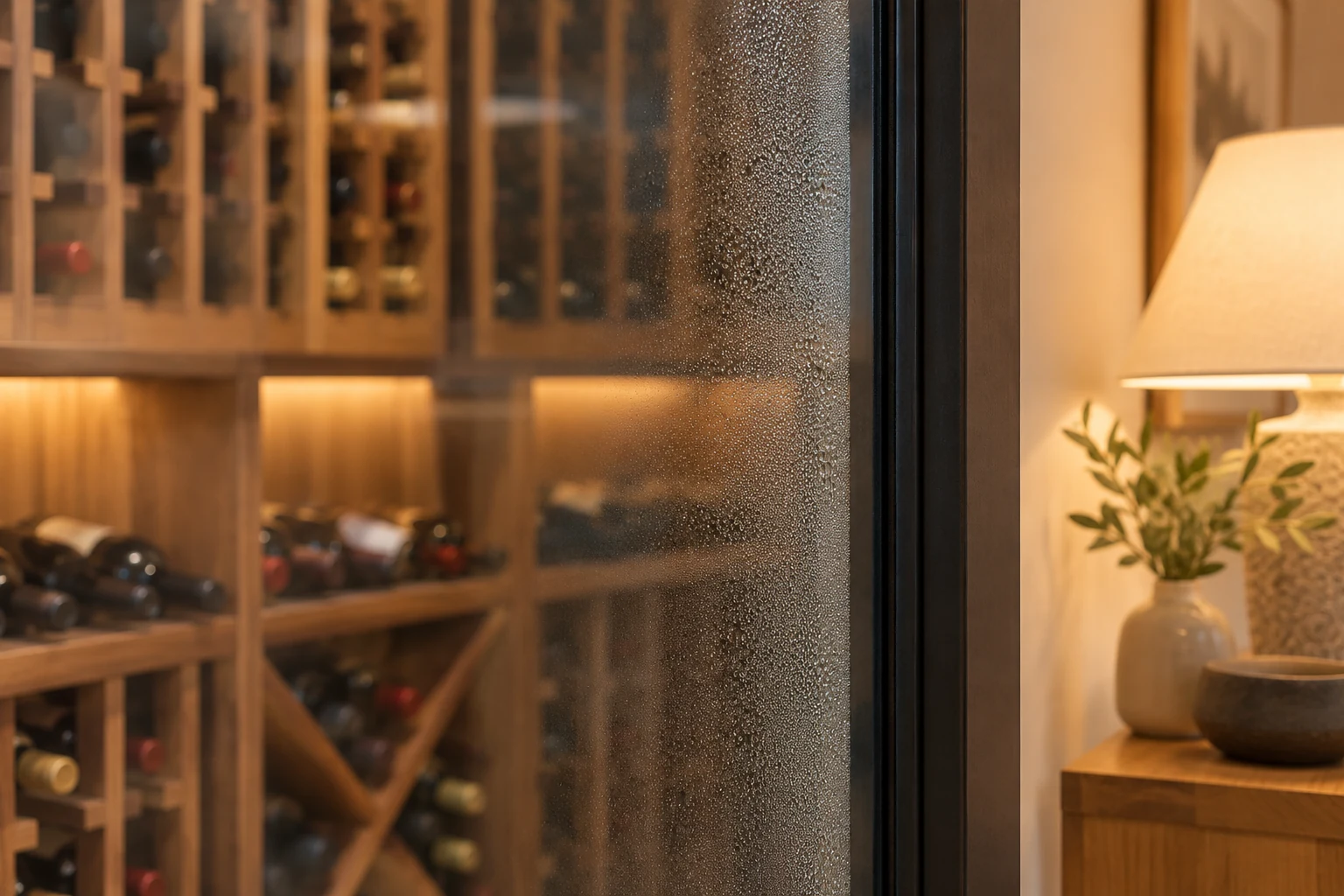
A glass wine room door can develop beads of water even when the cooling display looks normal. Surface condensation begins when moist air contacts glass or metal cold enough for the water vapor to condense. The next step is to locate the moisture and measure the conditions on that side of the door.
Find exactly where the moisture forms
Wipe an accessible patch on the room side, then on the cellar side. Note where the moisture returns. Check the middle of the glass, the perimeter, and the threshold. A persistent haze you cannot reach from either side may be between the panes. Photograph it and ask the glazing installer to confirm its location and inspect the insulated glass unit. If you see water arriving from above or pooling at one spot on the floor, trace that path separately and check for other moisture sources.
Give the installer two measurements to compare
Record the air temperature and relative humidity on both sides of the door when it fogs. Note whether it follows a long opening, a change in house HVAC, or another event that may have changed room humidity. Ask for surface-temperature readings at the center of the glass, next to the frame, and at the threshold. For each location, use the dew point of the air touching that surface. The ASHRAE Handbook guidance on surface condensation and glazing explains why glass, edge, and frame conditions can differ.
If condensation returns along the perimeter first, inspect the gasket contact and door alignment. A cold frame or glass edge can also create a recurring wet band. Moisture across much of the room-side glass makes the room’s humidity and the glazing’s thermal performance worth checking together. Avoid making large changes to the cellar setpoint until you have recorded the location and conditions of the problem.
Check the full doorway before approving a new build
Get the glazing, frame, seals, and threshold specified as an assembly. Ask for each room’s assumed design conditions and how the team will check surface temperatures at the door edges. In a retrofit, check that the new frame can tie into the existing insulation and air-control layer without leaving gaps. Allow room to adjust the hardware and replace worn seals without taking out finished millwork.
KIMBARRY manages wine room projects from design through installation and commissioning. For a glass-front room, that means coordinating the door assembly, insulated enclosure, and cooling system and confirming how the owner can reach and maintain the parts they will use. An agreed commissioning check can record the adjacent room’s conditions, the points measured on the door, and what the system does after a normal opening. Those notes provide a baseline for follow-up when the weather or household humidity changes.
Will double glazing stop sweating?
Insulated glass can help keep the exposed surface warmer under some conditions. Ask how the frame and edge are designed and whether the installer has accounted for the humidity of the adjacent room. The worst-performing point may be at the edge, even when the middle of the glass stays clear.
Common questions
What measurements should I give the installer?
Air temperature and relative humidity on both sides, surface temperature at the glass center and edge, and when and where the moisture appeared.