France Raises Its 2026 Wine Production Estimate for Languedoc-Roussillon
The November estimate puts Languedoc-Roussillon at 11.07 million hectoliters, up 25% from 2025. It covers a specific wine basin in southern France.
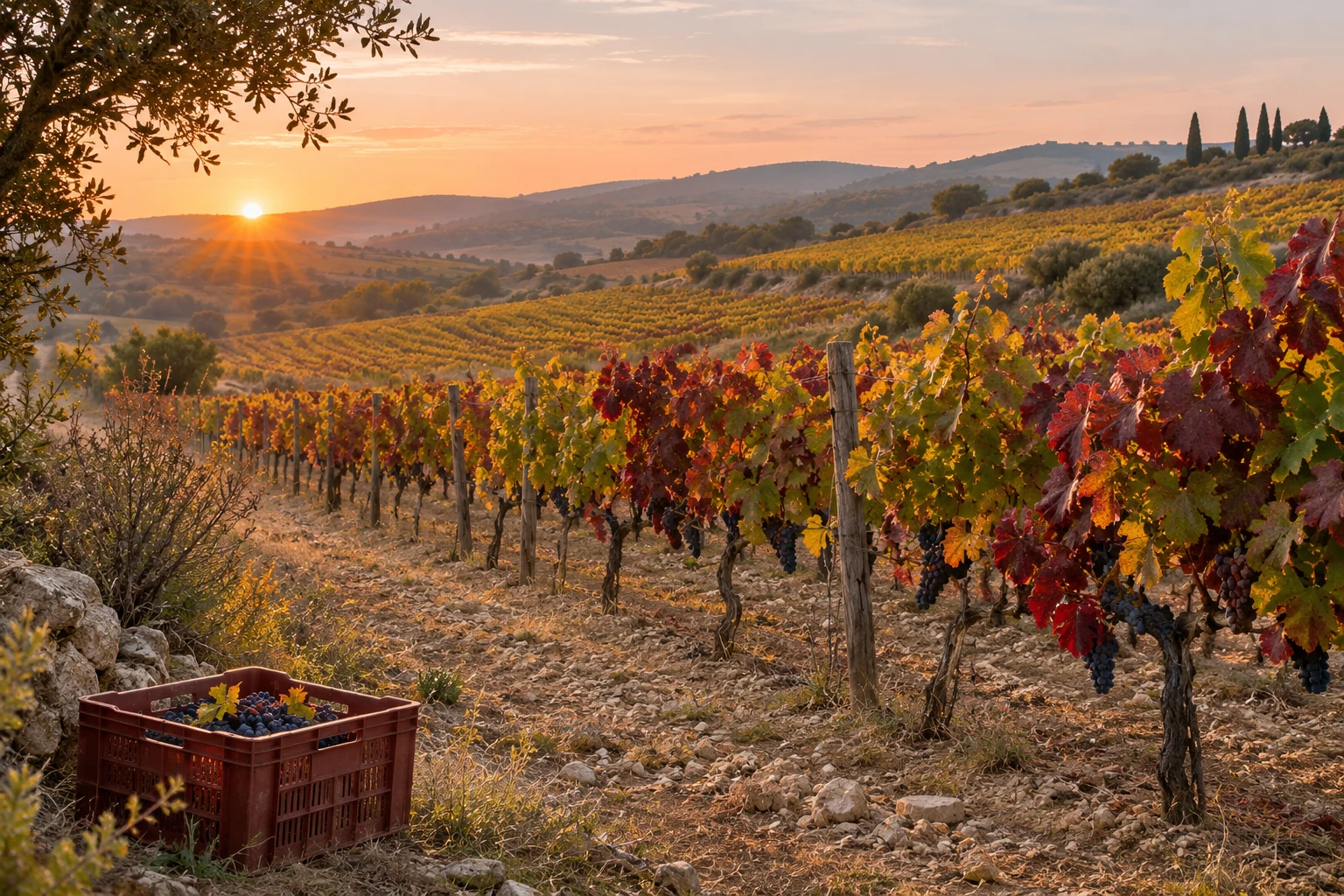
France’s regional agriculture authority has raised its 2026 wine production estimate for Languedoc-Roussillon to 11.07 million hectoliters, up 25% from 2025. DRAAF Occitanie’s update was published on November 10 and reflects the estimate as of November 1. The new figure is higher than the authority’s October estimate.
The agency reported early heat in some vineyards in late May, followed by several heat waves and worsening soil dryness through the summer. Rain late in August limited some of the effects of heat and drought, and the authority revised its yield outlook upward. It noted that irrigation, local storms, and differences in soils’ ability to hold water could still produce very different results from one vineyard to the next.
What the figure covers
The Languedoc-Roussillon estimate covers Aude, Gard, Hérault, and Pyrénées-Orientales. The same update gives a separate estimate of 1.93 million hectoliters, up 11.6%, for the part of the South-West production basin within Occitanie. The agency’s broader regional comparison, which puts the harvest around 18% above 2025, describes a different geographic scope.
For buyers tracking the 2026 vintage, the figures provide context for how much wine the region may produce. Availability will still depend on the producer, the wine, and the importer or retailer’s allocation. A production estimate also leaves questions about individual wine quality and release prices for producer and merchant reports.