KIMBARRY
Create Space for Art Display, Storage and Care
KIMBARRY coordinates art collection rooms as a turnkey project, bringing display, storage, handling and environmental management into one design and delivery process.
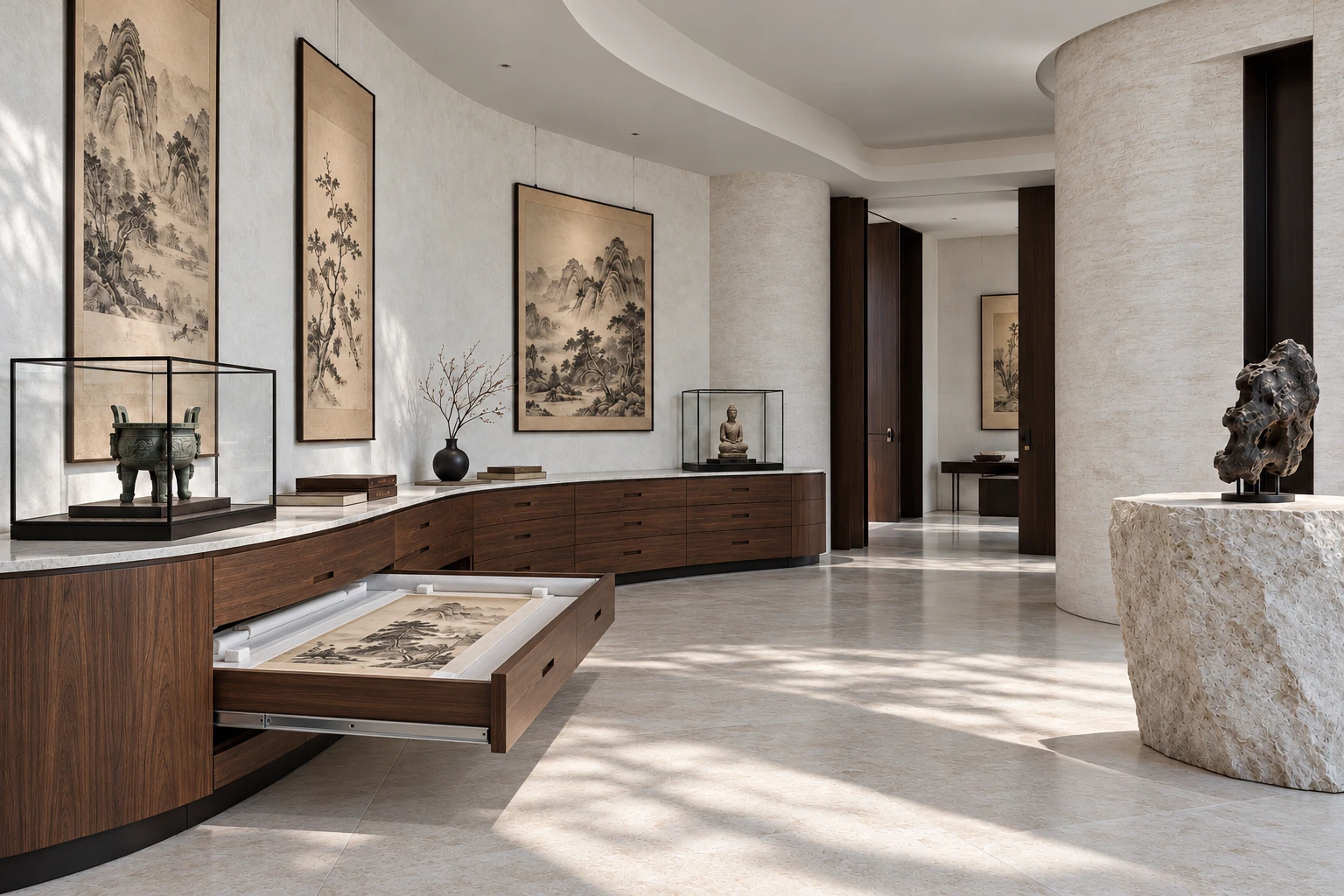
Document the objects before designing the room
Start with an inventory of the collection. Record each object's material, dimensions, framing, supports, current condition, packaging and intended display duration. Include how frequently objects are moved or handled.
Do not assume that all artwork and collectible materials share the same environmental requirements. A framed painting, an unframed work on paper and a mixed-material antique may require different arrangements.
- Object descriptions and dimensions.
- Framing, supports and packaging.
- Existing condition and inspection records.
- Display plans and expected handling frequency.
Separate display from protected storage
Display walls and cabinets serve a different purpose from protected storage and inspection areas. Consider where objects will be unpacked, examined, moved, displayed and repacked.
Check access routes, door openings, object movement, support points and contact materials. The route between storage, inspection and display should be practical for the largest and most delicate objects in the collection.
- Display walls and glass-fronted cabinets.
- Protected storage for objects not on display.
- Inspection and packing surfaces.
- Handling clearances and service routes.
Make environmental and lighting decisions with conservation advice
Light exposure involves preservation trade-offs. The Canadian Conservation Institute explains that light can contribute to deterioration and that appropriate precautions depend on the materials and exposure involved.
Humidity vulnerability also differs among materials. Its conservation guidance does not establish one universally safe humidity setting for every collection.
Coordinate lighting and environmental records with a qualified conservation professional familiar with the actual objects. Room designers can coordinate spatial requirements, but a design proposal is not a substitute for conservation assessment, authentication or valuation advice.
- Confirm object-specific environmental considerations.
- Review lighting exposure and display duration.
- Agree monitoring positions and recordkeeping.
- Document conservation recommendations before equipment selection.
Handover and continuing service
Works, materials, sizes and display periods inform cabinets, supports, lighting and circulation. KIMBARRY organises relevant conservation input and translates it into design and implementation requirements.
KIMBARRY remains the single point of contact for agreed maintenance, fault handling and later adjustments. Operating information and service arrangements are included in the handover.
KIMBARRY defines the project responsibilities, checks and handover requirements clearly. Warranty periods, response times, acceptance criteria and continuing services are agreed in each project contract.