KIMBARRY
Document Where and When Condensation Appears
KIMBARRY organises a system-wide investigation of cellar condensation, bringing together the glazing, enclosure, airflow, equipment and drainage. We coordinate the remedial scope, implementation and checks under agreed operating conditions.
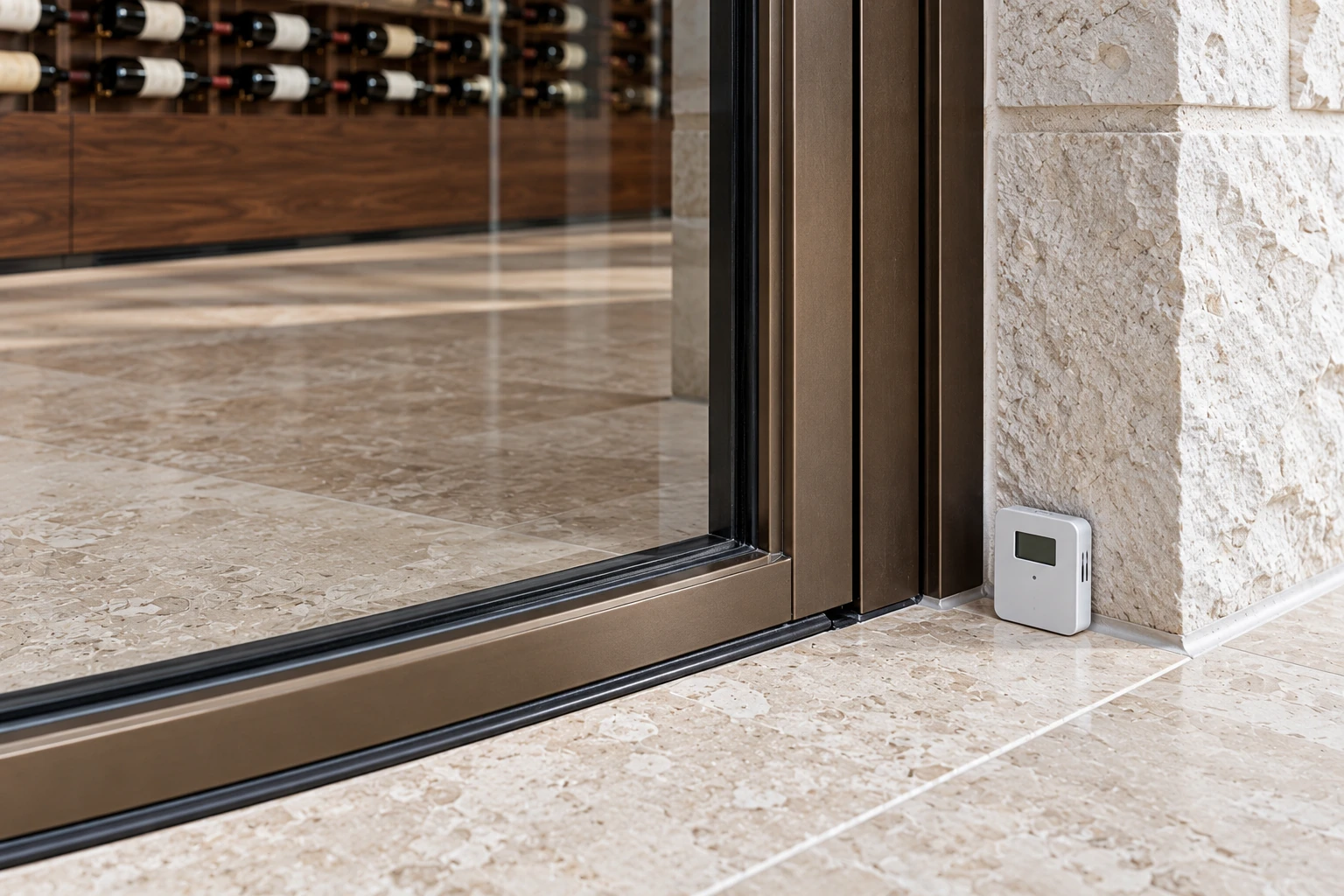
Identify the location and timing of moisture
Start by distinguishing moisture on the inside surface, outside surface or edges of the glazing. Record whether water appears on the door, frame, surrounding floor or another part of the enclosure.
Note the date and time of each observation, room conditions, adjacent-space conditions and any changes in equipment operation or door use.
- Inside, outside or edge-related moisture.
- Exact location and visible extent.
- Date and time of observation.
- Room and adjacent-space conditions.
- Equipment settings and recent operating changes.
- Door-opening, loading and occupancy events.
Understand why condensation needs more than a visual diagnosis
Condensation occurs when a surface reaches conditions at which moisture in the surrounding air can form water. The National Weather Service's dew-point guidance explains this basic relationship.
This principle helps frame an assessment, but it cannot identify the cause of a particular door, glazing assembly, installation or cooling-system problem from appearance alone.
- Record relevant temperature and humidity measurements.
- Identify the surface where moisture develops.
- Compare room and adjacent-space observations.
- Preserve photographs from different operating conditions.
Review the enclosure and equipment together
First clarify the role of the glass: is it a cabinet door, a display partition or part of the controlled room boundary? These configurations involve different interfaces and should not be treated as interchangeable.
A site review may need to examine enclosure construction, door seals, equipment operation, pipework, drainage and service access together. Avoid immediately replacing equipment or declaring a single root cause without relevant measurements and records.
- Glazing and enclosure construction.
- Door seals and installation interfaces.
- Environmental equipment and settings.
- Pipework and drainage.
- Maintenance and service access.
Handover and continuing service
KIMBARRY organises a system-wide investigation of cellar condensation, bringing together the glazing, enclosure, airflow, equipment and drainage. We coordinate the remedial scope, implementation and checks under agreed operating conditions.
KIMBARRY remains the single point of contact for agreed maintenance, fault handling and later adjustments. Operating information and service arrangements are included in the handover.
KIMBARRY defines the project responsibilities, checks and handover requirements clearly. Warranty periods, response times, acceptance criteria and continuing services are agreed in each project contract.