KIMBARRY
Wine Cabinet or Dedicated Wine Cellar?
A wine cabinet can suit a collection when the usable rack space fits its bottles and cases. Consider a dedicated wine cellar when storage, tasting and access need a room of their own. Compare both options against the same inventory and site conditions.
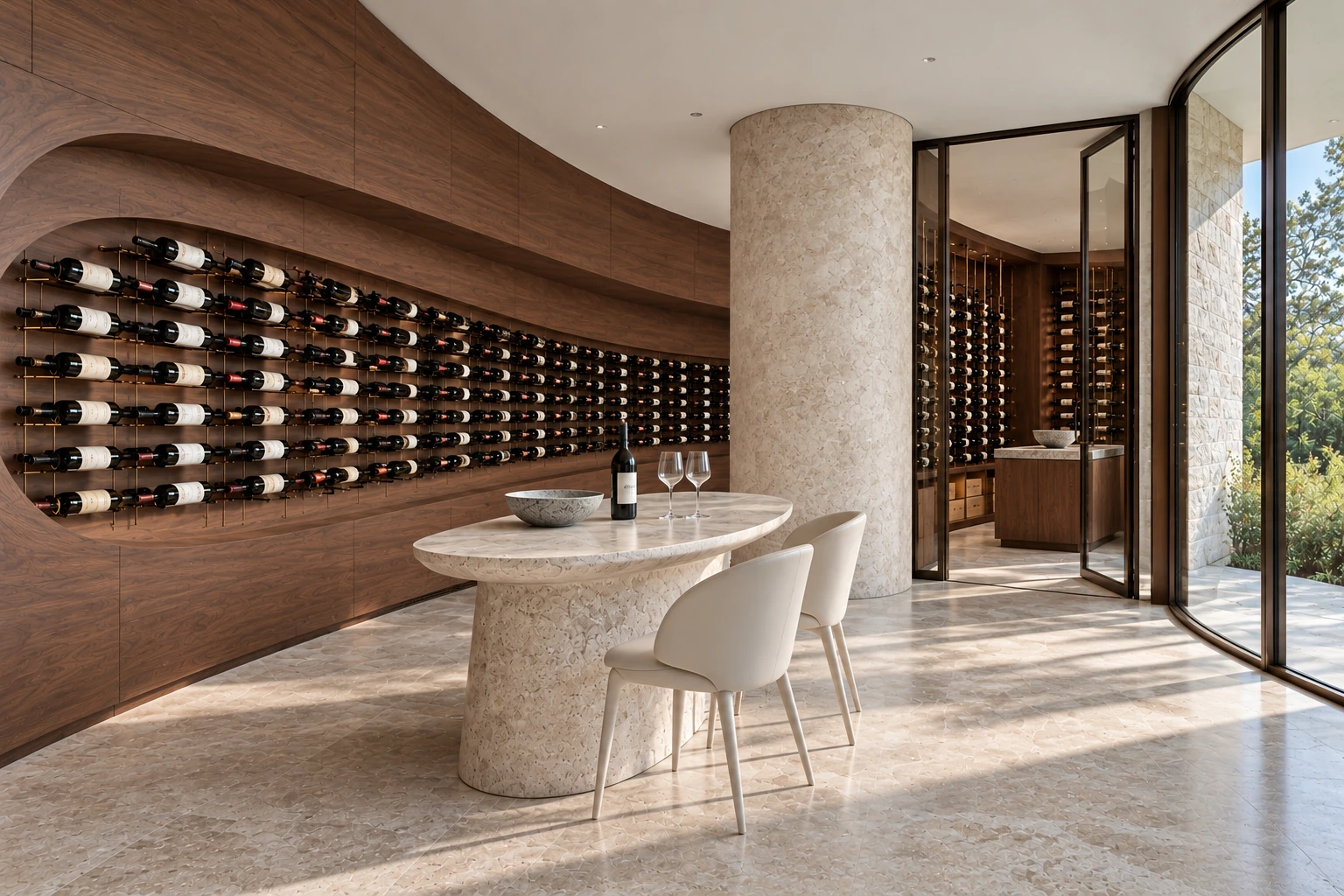
Build a realistic picture of your collection
Begin with the wines you own and expect to add. Record bottle quantities, bottle types, unusual dimensions, original cases and packaging. Separate bottles intended for everyday access from those being held longer term.
A cabinet's advertised bottle capacity is not necessarily its usable capacity for your collection. Bottle shape, rack orientation, spacing and access all affect how many bottles can actually be accommodated.
- Current bottle count and expected additions.
- Bottle sizes, shapes and original cases.
- Daily-access wines versus longer-term holdings.
- Preferred display arrangement and retrieval frequency.
Compare the complete installation
Evaluate a cabinet and a room using consistent assumptions. Look beyond appearance and nominal capacity to rack configuration, usable clearances, enclosure construction, doors, heat rejection, drainage, utility connections and future service access.
A dedicated room also requires attention to adjacent spaces, available ceiling height, door openings, glazing and the construction stage. Display glass, lighting and the frequency of door use can affect the environmental design discussion.
We assess bottle formats, quantities and use, then coordinate racks, glazing, enclosure, cooling, drainage and maintenance access. Manufacturers and implementation teams work to KIMBARRY’s reviewed requirements.
- Usable storage volume and rack layout.
- Door, enclosure and glazing requirements.
- Equipment location and heat rejection.
- Drainage, electrical and other utility interfaces.
- Inspection, maintenance and replacement access.
Include operation and handoff in the decision
Two visually similar proposals may include very different responsibilities. Compare detailed design, custom cabinetry, environmental equipment, installation, commissioning, operating instructions and ongoing maintenance separately.
There is no single setting that should automatically be assumed appropriate for every wine, appliance or room. Environmental targets and equipment selection need to reflect the collection, building conditions and intended use.
If you already have temperature fluctuations, moisture or other storage concerns, collect operating records and photographs before changing equipment. A corresponding site and equipment assessment is more useful than selecting a replacement based on symptoms alone.
- Who supplies and installs each component?
- Who verifies operating conditions at handoff?
- Who performs routine checks and equipment service?
- What records and corrective-work responsibilities are included?
What should a handover cover?
Ask for the operating checks, instructions and agreed maintenance in writing. The guide to comparing project quotations lists the work and responsibilities to check.
We assess bottle formats, quantities and use, then coordinate racks, glazing, enclosure, cooling, drainage and maintenance access. Manufacturers and implementation teams work to KIMBARRY’s reviewed requirements.
KIMBARRY’s wine cellar service remains the single point of contact for agreed maintenance, fault handling and later adjustments. Operating information and service arrangements are included in the handover.
KIMBARRY defines the project responsibilities, checks and handover requirements clearly. Warranty periods, response times, acceptance criteria and continuing services are agreed in each project contract.
Prepared by KIMBARRY · Updated